
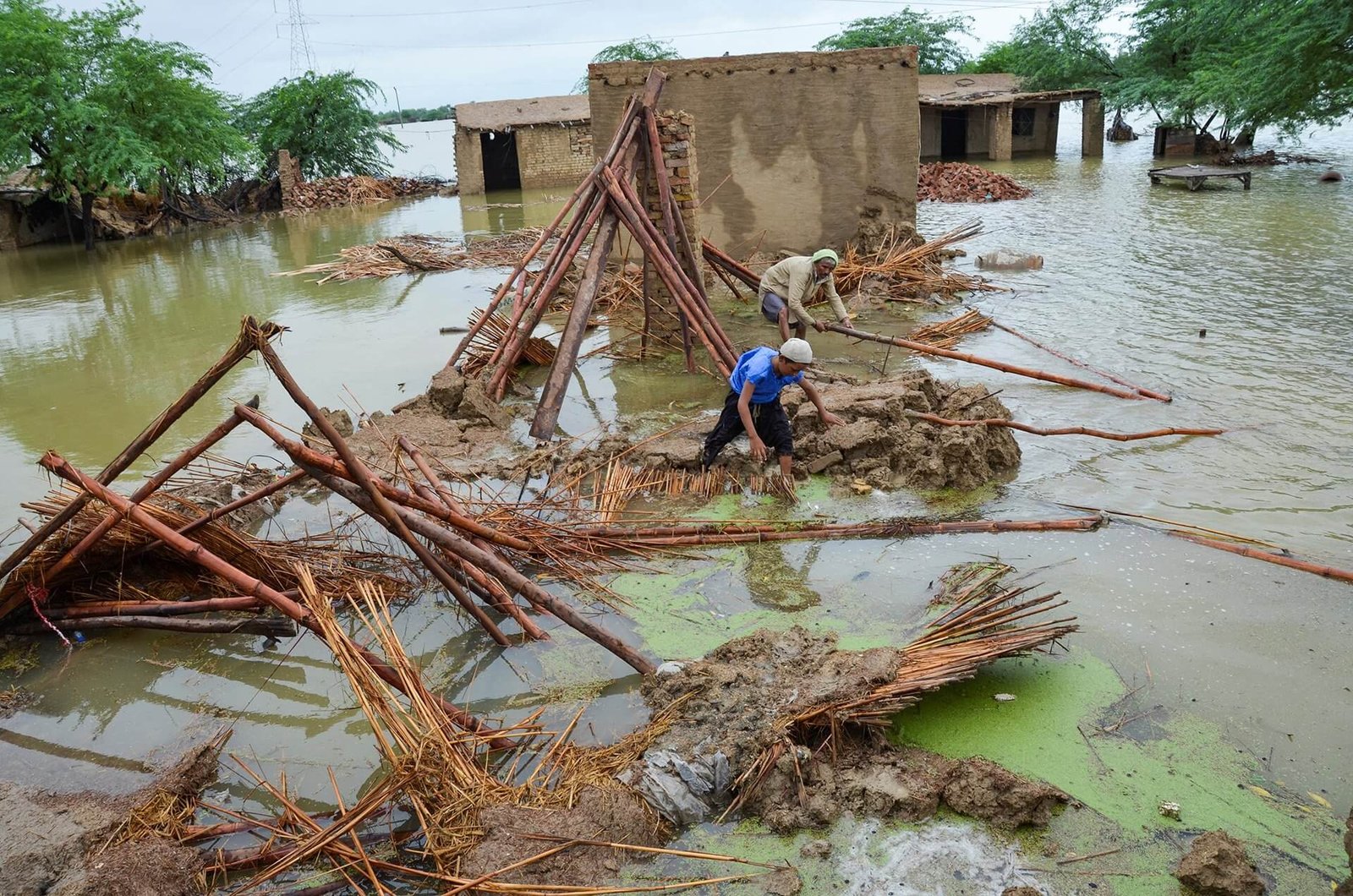
In August 2025, Pakistan once again found itself grappling with a legacy of heartache and upheaval as monsoon torrents unleashed record breaking floods across the nation. This calamity, striking especially the Punjab and Khyber Pakhtunkhwa regions, serves both as a sorrowful reminder of human vulnerability and a clarion call for climate justice and preparedness.
A Nation Under Water
For the first time in history, all three major rivers Ravi, Sutlej, and Chenab overflowed simultaneously in eastern Pakistan. The deluge inundated over 1,400 villages, displaced nearly 1.2 million people, and forced evacuation of more than 480,000 residents and 405,000 livestock. One news report described the scale poignantly:
“Pakistan evacuates a million people as farming belt hit by worst floods in decades.” Reuters
In Khyber Pakhtunkhwa, catastrophic flash floods triggered by cloudbursts and relentless monsoon rains claimed over 320 lives, with more than 150 people killed in Buner district alone. A rescue helicopter tragically crashed during relief operations, adding to the collective grief.
Meanwhile, in Punjab the province home to millions 15 lives were lost, and an estimated 167,000 people were displaced in one province alone. The floodwaters swamped 1,400 villages, setting off a historic emergency in the region.
The Human Cost: Lives Shattered and Futures Undermined
The human suffering is immense. Beyond the death toll, families are uprooted, homes destroyed, livelihoods washed away, and emotional scars deepened. A report noted the strain on survivors:
“Thousands were evacuated, but many felt abandoned left without food, water, or electricity as waterlogged, sewage-filled surroundings spiked disease risk.” The Guardian
In Punjab, whole communities were left vulnerable, with health officials raising alarms over waterborne diseases like cholera and hepatitis, as well as snakebite risks
Behind the Waters: Climate, Geography, and Political Strain
This devastation did not occur in a vacuum. Pakistan’s complex geography its glacial north, deforested landscapes, and fragile infrastructure combined with climate-driven monsoon extremes, set the stage for such disasters. One expert commentary noted that melting glaciers and depleted forests compound flood severity.
Moreover, sudden water releases from Indian dams heightened the crisis, illustrating how transboundary tensions can exacerbate natural disasters. Officials described India’s actions as “water aggression,” citing inadequate warning and coordination.
Government Response: Rescue, Relief, and Reflection
Despite immense challenges, the government mobilized proactively. Punjab’s Chief Minister Maryam Nawaz Sharif spearheaded massive rescues in at least seven districts, deploying army units and relief agencies. Evacuations reached 150,000 to over 200,000 people, and relief and medical camps were established in hundreds of communities.
Officials also attempted to mitigate risk through controlled breaches of flood bunds not ideal, but a desperate measure to protect densely populated areas
Voices Amid Despair
On the ground, grief intermingled with resolve. A villager described the ordeal:
“The water left nothing.” The Guardian
In border-stricken areas like Kasur, residents endured both floods and conflict:
“Villagers […] recount multiple displacements, struggling with the emotional and logistical toll of abandoning homes, schools, and livestock.” Reuters
Toward Resilience: Solidarity, Learning, and Hope
To rise from such tragedy demands far more than short-term aid. Pakistan’s past experiences particularly the 2022 floods—laid the groundwork for improved resilience. The 2023 International Conference on Climate Resilient Pakistan in Geneva had already outlined the “Resilient, Recovery, Rehabilitation, and Reconstruction Framework (4RF)”, securing over $9 billion in pledges for rebuilding efforts.
Yet, reports show the nation’s disaster management institutions remain under-resourced. Bodies like NDMA and its think-tank, NIDM, are critical but must grow stronger to avert future catastrophes.
Final Thoughts: A Call to Collective Compassion
As the waters recede, Pakistan stands humbled yet hopeful. The images of displacement and desperation are searing but so are the signs of solidarity: neighbors rescuing neighbors, communities sharing what little remains, and responders racing against time.
To every human reading this whether in Lahore, London, or beyond let these stories stir not helplessness, but empathy with purpose. Donate thoughtfully. Support climate adaptation efforts. Demand that resilient infrastructure replace fragility.
Pakistan needs our hands, hearts, and voices, not just today, but for the building of tomorrow’s safety. Only through shared resolve can we ensure that when rains fall, they no longer wash away lives, but renew our collective commitment to survival, dignity, and hope.